Rejuran in Seoul: Types, Differences and Why the PN Skin Booster Is So Popular
The original Rejuran, Rejuran i, Rejuran s and HB Plus are not interchangeable. Here is what the official product information says—and what the current evidence does not yet prove.
Rejuran appears on so many Seoul clinic menus that it can look like a single standard treatment. It is not. Rejuran is a branded family of physician-administered injectable medical devices made by PharmaResearch, and the Korean line includes the original Rejuran, Rejuran i, Rejuran s and Rejuran HB Plus.
Their shared ingredient is polynucleotide, usually shortened to PN. The important differences are the syringe size, formulation and intended treatment area. Those details matter more than the colour of a clinic’s price banner.
First: PN is not automatically the same thing as PDRN
Both terms refer to purified DNA-derived materials and are often used loosely in beauty marketing. Rejuran’s injectable medical-device line is identified by its manufacturer as PN. PDRN appears in other medicines and topical cosmetics, but a cream labelled PDRN is not the same product—or the same delivery method—as an intradermal PN injection.
In Korea, the official intended purpose of the original Rejuran medical device is the temporary improvement of facial wrinkles in adults. That wording is narrower than the broad claims often seen online about regeneration, pore removal, scar erasure or permanent anti-ageing.
The four injectable types
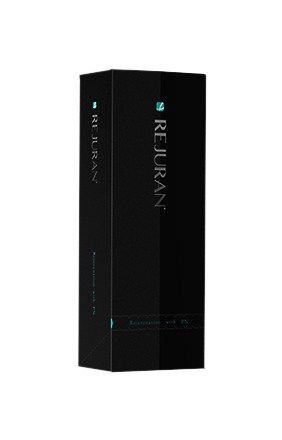
Original Rejuran is the general facial product. PharmaResearch lists PN as its composition and supplies it in 2 cc syringes, with two syringes in one pack. When a clinic advertises Rejuran by the session, ask how many cc are included; a treatment name without a volume is not a complete price.
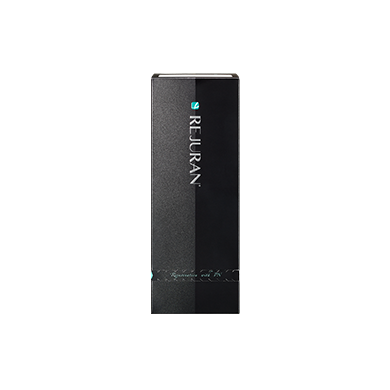
Rejuran i is supplied in a 1 cc syringe. The manufacturer’s English product information specifically lists the face—especially the eye and perioral areas—as well as the neck, décolleté and hands. Its smaller presentation makes it easier to discuss a limited, delicate area, but the choice of depth, amount and technique still belongs to the physician.
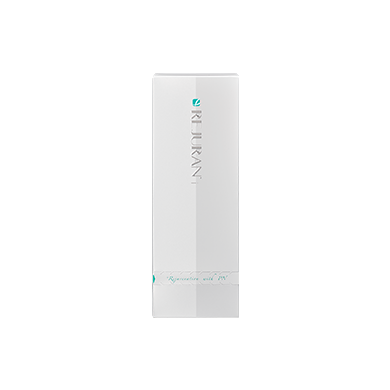
Rejuran s also contains PN and is supplied in a 1 cc syringe. It is frequently marketed by clinics for focused textural or scar concerns. However, the manufacturer’s current English product page states the intended purpose as temporary improvement of facial wrinkles rather than promising scar removal. Travellers should treat any scar-specific recommendation as an individual medical plan, not a guaranteed property of the letter S.
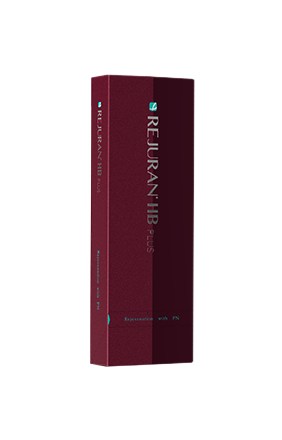
Rejuran HB Plus is the formulation with the clearest ingredient difference. Its official product information lists sodium polynucleotide, sodium hyaluronate and lidocaine hydrochloride in a 1 mL syringe. The Korean instructions for use identify its purpose as temporary improvement of adult crow’s-feet through physical tissue restoration. Lidocaine is included to reduce injection discomfort, but HB Plus should not be described as painless.
Why it became so popular in Korea
Rejuran fits the Korean ‘skin quality’ category. Instead of being sold mainly as a way to add visible volume or freeze a facial movement, PN treatments are discussed around fine lines, texture, hydration and overall appearance. That makes the treatment easy to position alongside lasers and energy-based procedures rather than as a direct substitute for filler or botulinum toxin.
There is also genuine professional familiarity. In a survey of 235 Korean board-certified dermatologists familiar with skin boosters, 88 percent reported using PN injections. The most commonly selected concerns included cheek and eye-area fine lines, uneven texture and dry skin. Three sessions spaced four weeks apart was the most commonly reported schedule. This describes Korean practice patterns; it does not prove that the same schedule is necessary or optimal for every patient.
A third reason is the line-up itself. A general facial syringe, a smaller eye-area option and an HB formulation with hyaluronic acid and lidocaine allow clinics to present several versions under one familiar brand. Social media then compresses those distinctions into simple labels such as ‘healer’, ‘eye’ or ‘less painful’, making the name easier to remember than the underlying medical details.
What the evidence actually supports
Published studies and reviews report promising changes in measures such as wrinkle appearance, texture, elasticity and patient satisfaction after PN injections. But the evidence base remains limited. A systematic review covering studies published through early 2024 found only nine eligible studies involving 219 PN-treated participants, and rated the included research as low or moderate quality.
The studies also varied in product, dose, injection technique, treatment area and follow-up. That makes it difficult to turn an encouraging average result into a precise promise for one traveller. More recent observational work is useful, but it still does not replace large independent randomized trials or establish one universal protocol.
The sensible conclusion is neither that PN is proven to rebuild every type of skin nor that it has no evidence. It is a widely used injectable with early-to-moderate evidence for selected aesthetic outcomes, while the optimal product, schedule and durability remain areas of ongoing research.
Downtime and travel timing
PN is injected at multiple points, so temporary bumps at the injection sites are part of the immediate appearance. Published reviews describe local pain, swelling, redness, itching, bruising and temporary irritation; reported reactions in the reviewed studies usually resolved within about a week. Individual recovery can be shorter or longer.
Do not schedule the appointment immediately before a wedding, professional shoot or long-haul departure. A visitor who wants time for swelling or bruising to settle—and time to contact the treating clinic if something looks wrong—should place the appointment near the beginning of the Seoul stay rather than the final afternoon.
Before treatment, tell the clinician about pregnancy or breastfeeding, active skin infection, bleeding or clotting problems, anticoagulant medication, prior reactions to injectable products and any fish-related or lidocaine allergy. These details do not all lead to the same decision, but they require proper screening. Never attempt to buy or self-inject the product.
How to compare Seoul quotes
- Confirm the full product name: original Rejuran, i, s or HB Plus.
- Confirm the total volume in cc or mL, not only the number of sessions.
- Ask which facial areas are included and who performs the injections.
- Ask whether topical anaesthetic, aftercare and a follow-up check are included.
- Request the official package and product-authentication check before treatment.
- Keep a record of the product, lot information, volume and treatment date.
Price alone is especially misleading with Rejuran because one clinic may quote 1 cc for a limited area while another quotes 2 or 4 cc for a broader facial plan. HB Plus also has a different composition, so it should not be compared with the original product as if the only difference were a marketing name.
The bottom line
For a Seoul visitor, the most useful way to understand Rejuran is as a product family rather than a trend. Original Rejuran is the general PN option; Rejuran i is presented for delicate or limited areas including around the eyes and mouth; Rejuran s is a 1 cc PN product whose scar-focused use should be discussed as a clinician’s plan; and HB Plus adds sodium hyaluronate and lidocaine in a 1 mL presentation.
Popularity does not make the treatment universally appropriate, and a single holiday appointment is not automatically equivalent to the multi-session courses often used in Korean practice. Choose the clinician and the plan first, then check that the box, volume and price match what was discussed.